Guided Growth
Guided growth is a continuously researched procedure for skeletally immature patients with angular deformities and leg length discrepancies.
It is a growing surgical option for the correction of lower limb angular deformities in skeletally immature patients, reducing the need for major procedures. This procedure can be performed in any plane (Varus/Valgus; Recurvatum/Procurvatum) or anatomical region (Knee, ankle, hip, etc.). Given its high incidence, its most frequent use is in coronal plane deformities around the knee, but its utility has also been demonstrated in other segments.
Permanent epiphysiodesis can be performed in patients within two years of reaching skeletal maturity, with temporary epiphysiodesis being considered for patients with more than two years of remaining growth.
In mild to moderate cases, success rates reach 100%. However, patients with Blount disease, obesity, advanced skeletal age, or severe deformities have lower chances of achieving complete correction.

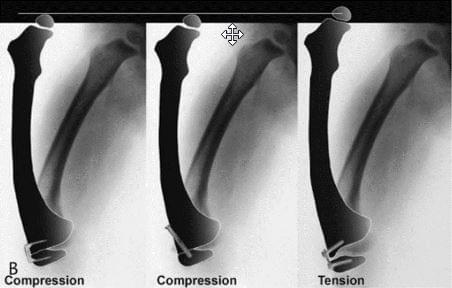
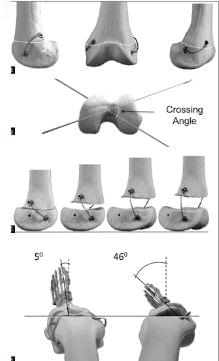
Rotational guided growth has been further investigated. It can be achieved through the implantation of a progressive percutaneous derotation system. Dr. Martel G. developed this system, and along with collaborators like Dr. Francisco Praglia and Dr. Dror Paley, published it. "Rotational guided growth." Gonzalo Martel; Dror Paley; Francisco Praglia; colleagues. Journal of Limb & Reconstruction, Vol 4, No 2, July‐December 2018, pp 97‐105.
Later (in 2019), Metaizeau published this technique in 20 patients. The results were promising, with an average derotation of 25 degrees over 22 months.